
Production Equipment
Transfer Equipment Build
One-Cycle Logistics Build
WHY
Why Is It Needed?
01
Workers carry products and materials by hand, so travel times are long and location errors and logistics congestion occur often.
02
Because workers operate lift trucks and forklifts themselves, safety issues such as collisions with equipment, pinching, and falling-object accidents are always a risk.
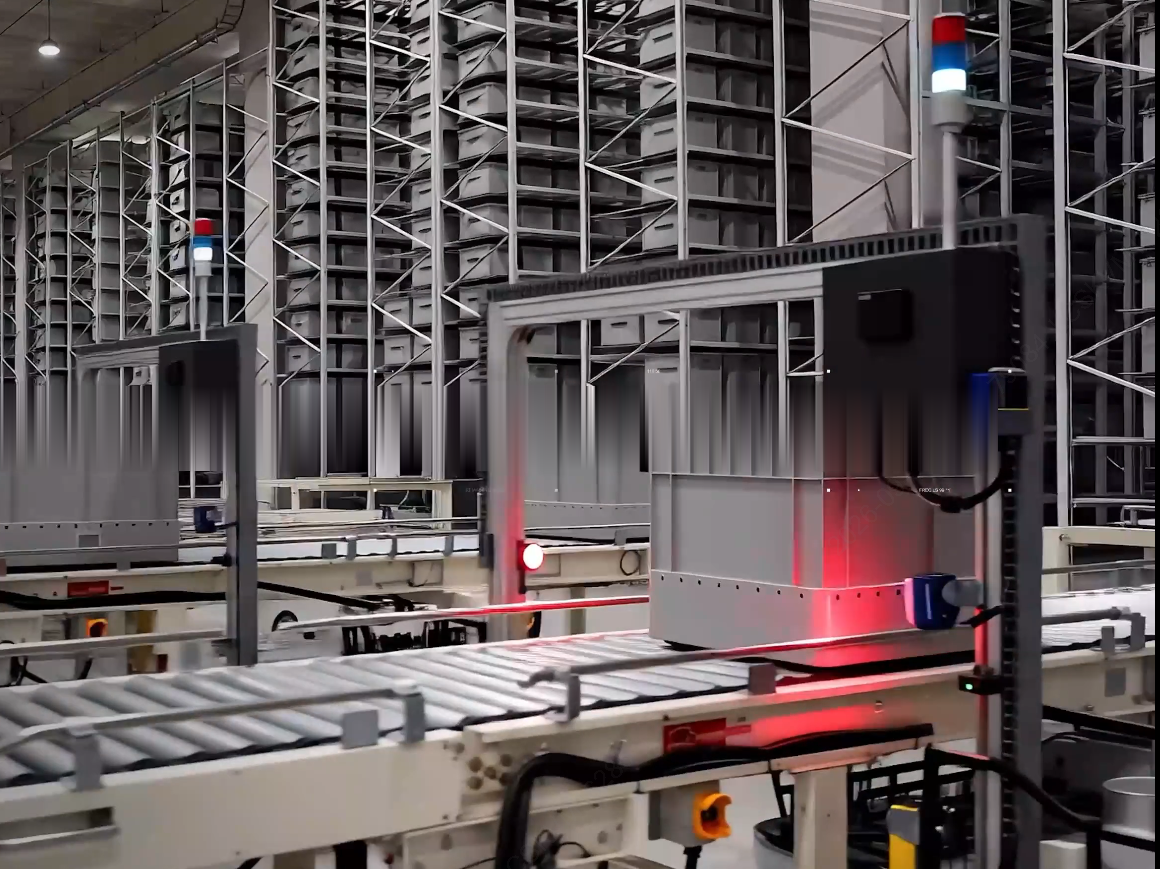
Integrates the design of transfer equipment and control systems to build an automated transfer environment and real-time logistics operating framework optimized for the customer's process. Material transfer automation minimizes reliance on workers and logistics congestion.
WHERE
Where Is It Used?
Target industries: displays, semiconductors, and manufacturing overall
Target Customers
Companies that want to efficiently adjust transfer routes and operating conditions as equipment, processes, and output volumes change
KEY CAPABILITIES
Key Capabilities
01
Product and Material Transfer
AMR/AGV/conveyor automated transfer
02
Transfer Routes
Automatic operation on optimal routes
03
Process Integration
Automatic integration based on equipment PLC system signals
04
Location Management
Real-time location and transfer status management
05
History Management
Automatic management of transfer history based on MES and WMS
MODULES
Optimization design based on process operating scenarios
Assess Current State and Gather Requirements
Collect basic design data
Analyze equipment status and logistics flow
Set the direction for automation
Select products and processes to automate
Define design direction and conditions
Review layout changes
Layout and Concept Design
Automation concept and layout design
Define equipment specs
Calculate investment cost and expected benefits
Validation Through Simulation
Develop simulation model
Develop equipment and logistics operating scenarios
Place equipment based on the to-be layout
Validate the to-be through simulation
Key Outputs of Transfer Equipment Build
AMR, AGV, conveyor, lift, articulated robot, OHT, MTR, mobile shuttle, stacker crane, tray transfer equipment, and more
Equipment operating scenarios
Equipment spec definition document
Equipment communication specification
Phased implementation plan
Full Automation requirements document
IMPACT
Benefits
01
Logistics automation built on transfer equipment
02
Lower labor costs for transfer work
03
Less logistics congestion and waiting time
04
Stabilized logistics flow between processes
CUSTOMER VOICE
Voice of the Customer
“Even when output or process sequence changes, we can adjust transfer conditions in the control system, so we can respond flexibly to production changes.”
“With AMRs and conveyors automating transfers between processes, worker movement and process waiting time have dropped significantly.”
REFERENCE